
When planning a renovation or upgrading your electrical setup, one question tends to surface sooner or later: should you stick with traditional wall sockets, or switch to a power track system? On paper, both serve the same purpose—delivering electricity where you need it. But in real-world usage, the difference is night and day.
In Malaysia, where modern homes and workspaces are evolving toward cleaner designs and smarter functionality, the debate between power track vs traditional wall socket is becoming more relevant than ever. The choice you make doesn’t just affect convenience—it shapes how you use your space every single day.
Traditional wall sockets are exactly what most people are familiar with. Fixed electrical outlets installed into walls, positioned during construction or renovation, and rarely changed afterward.
They’ve been around for decades for a reason. They’re simple, reliable, and widely understood. Once installed, you plug in your devices and go about your day without thinking twice.
But that simplicity comes with a trade-off. The moment your needs change—maybe you add new appliances, rearrange your layout, or upgrade your workspace—the limitations start to show. The socket stays where it is, even if your lifestyle doesn’t.
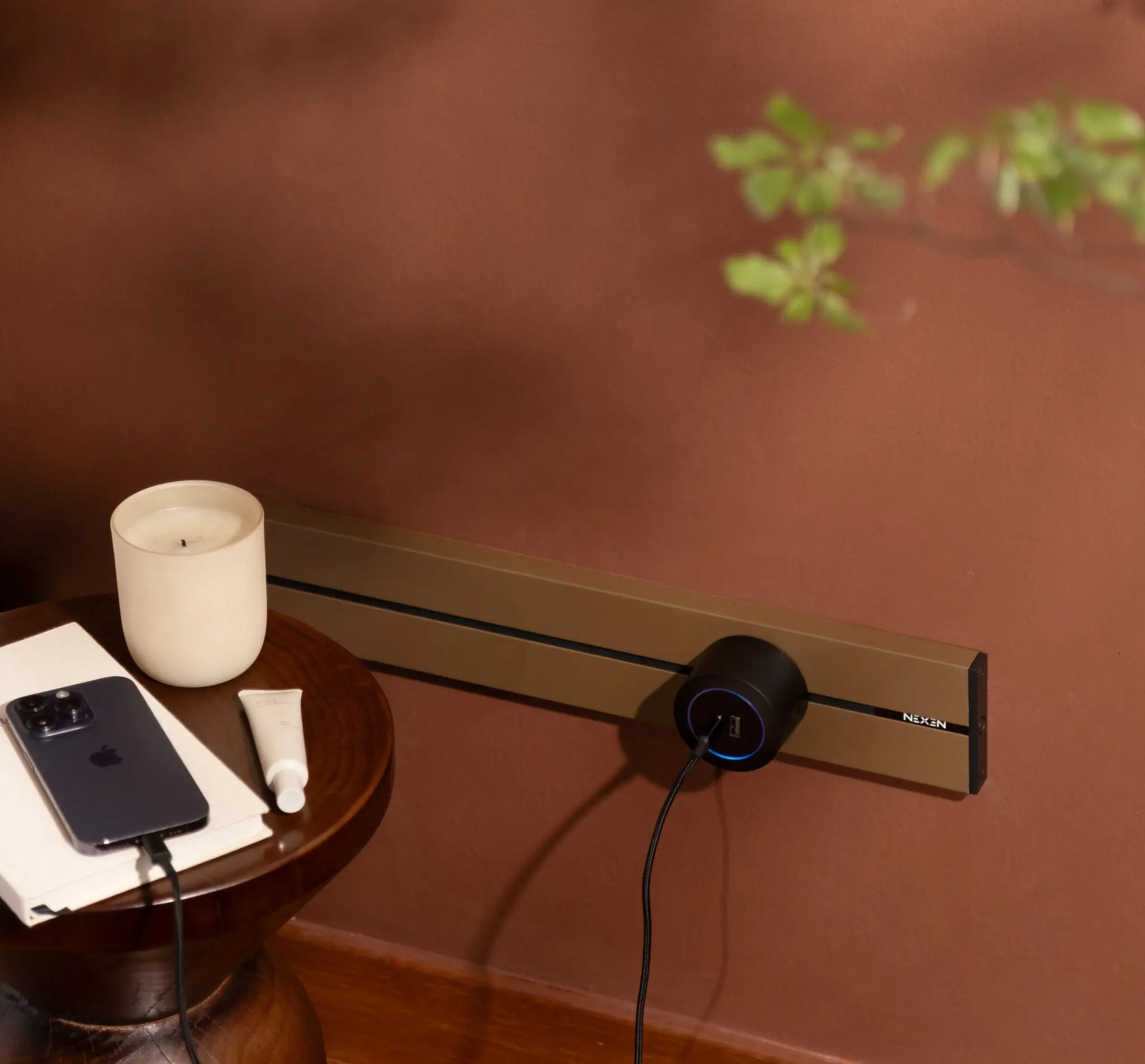
A power track system takes a completely different approach. Instead of fixed sockets, you get a continuous track that allows adapters to be placed anywhere along its length.
This means your access to power becomes flexible rather than fixed. You’re no longer planning your space around where sockets are located. Instead, the electrical system adapts to you.
In Malaysia, this shift is particularly noticeable in modern kitchens and home offices, where the need for multiple devices and clean layouts often clashes with traditional socket limitations.
If there’s one area where the difference becomes immediately obvious, it’s flexibility.
With traditional wall sockets, you’re locked into a fixed layout. Need an extra plug point? You’re either reaching for an extension cord or calling an electrician.
Power track systems eliminate that constraint. You can add, remove, or reposition adapters anytime along the track. It’s like having an adjustable power source that evolves with your needs.
For homeowners who frequently update their setups or use multiple appliances, this flexibility isn’t just convenient—it’s transformative.
Let’s be honest. Electrical setups are rarely designed with aesthetics in mind, especially in older homes.
Traditional wall sockets often result in:
Power track systems, on the other hand, are built with modern design in mind. The track sits neatly along a wall or under cabinets, and cables are kept organised.
The result is a cleaner, more streamlined look. In Malaysian homes where open-concept layouts and minimalist interiors are becoming more popular, this visual upgrade alone can make a significant difference.
Safety is often the deciding factor when comparing power track vs traditional wall socket.
Traditional sockets are generally safe when installed correctly, but they come with familiar risks—overloading, exposed outlets, and reliance on extension cords when there aren’t enough plug points.
Power track systems are designed to address these issues. The internal conductive components are insulated, and power is only accessed through properly inserted adapters.
Many systems are built to comply with standards set by organisations like International Electrotechnical Commission, ensuring proper insulation, durability, and safe operation.
For households with children or high device usage, this added layer of protection can provide peace of mind.
Installation is where traditional sockets often have the upper hand—at least initially.
They’re straightforward to install during construction or renovation. Once placed, they require minimal thought.
Power track systems, however, require a bit more planning upfront. Placement matters, and you’ll want to ensure the track is installed in areas where flexibility will actually be useful.
That said, power tracks can reduce the need for multiple socket installations. Instead of installing several outlets across a wall, one well-placed track can serve the same purpose—and more.
In long-term renovation planning, this can actually simplify your electrical layout.
At first glance, traditional wall sockets appear more cost-effective. They’re cheaper to install and widely available.
But cost shouldn’t be viewed in isolation.
Power track systems may have a higher upfront investment, but they can reduce future costs related to:
In other words, traditional sockets are cheaper today. Power tracks are often more cost-efficient over time, especially for homes or offices that evolve frequently.
The real comparison comes alive when you look at how each system performs in everyday scenarios.
In kitchens, traditional sockets often struggle to keep up with modern appliances. You end up juggling plug points or relying on extension cords.
Power track systems shine here. Appliances can be plugged in exactly where they’re needed, and repositioned as your workflow changes.
In home offices, where multiple devices are the norm, power tracks provide a cleaner and more adaptable solution compared to fixed sockets.
Even in commercial environments across Malaysia, the ability to reconfigure power access without rewiring makes power tracks a practical choice.
Traditional wall sockets are durable, but they’re not designed for constant plugging and unplugging across multiple devices.
Power track systems are built for modular use. Adapters are designed to be inserted, removed, and repositioned frequently without degrading performance.
Over time, this makes a difference, especially in high-usage areas like kitchens and workstations.
The decision between power track vs traditional wall socket ultimately comes down to how you use your space.
If your layout is fixed, your device usage is minimal, and you don’t anticipate changes, traditional sockets can still do the job effectively.
But if you value flexibility, modern design, and the ability to adapt your setup over time, power track systems offer a clear advantage.
For many Malaysian homeowners today, it’s no longer about choosing one over the other entirely. It’s about using each where it makes the most sense—traditional sockets for basic needs, and power tracks for high-use, dynamic areas.
The conversation around power track vs traditional wall socket isn’t about replacing one with the other completely. It’s about understanding how each fits into modern living.
Traditional sockets are reliable and familiar. Power track systems are flexible and future-ready.
As homes and workspaces in Malaysia continue to evolve, the ability to adapt becomes more valuable than ever. And that’s exactly where power track systems stand out.
If you’re planning your next renovation or simply looking to upgrade your setup, it might be time to rethink how power should work in your space—not just today, but years down the road.
Q: What is the main difference between a power track and a wall socket?
A: A power track allows flexible placement of sockets along a track, while a wall socket is fixed in one position.
Q: Is a power track safer than a traditional wall socket?
A: Both are safe when properly installed, but power tracks often include additional safety features like insulated tracks and controlled access.
Q: Can I use both power track and wall sockets together?
A: Yes, many Malaysian homes use a combination of both to balance flexibility and practicality.
Q: Are power tracks suitable for kitchens?
A: Yes, they are commonly used in kitchens for powering multiple appliances efficiently.
Q: Is a power track worth the investment?
A: For spaces that require flexibility and frequent device usage, a power track can offer strong long-term value.
Click on the link to find out more about our services and products. Chat with our sales representatives today!
Home
About Nexen
Our Products
Luxe Collection
Power E-Bar Collection
Nexen SG

