
When most homeowners in Malaysia first learn about power track systems, the initial reaction is usually the same. It sounds like a single product category. One system, one function, one standard design. But once you start exploring further, you quickly realise there are different types of power track systems, each designed for specific needs, layouts, and usage scenarios.
Understanding these variations is not just helpful. It directly affects how well the system performs in your home or workspace. Choosing the wrong type might still work, but choosing the right one makes everything feel seamless, efficient, and purpose-built.
Electrical needs are not the same across every space. A kitchen setup in a Malaysian condo has very different requirements compared to a home office or a commercial workstation.
Because of this, power track systems have evolved into multiple types, each tailored for specific applications. Some prioritise flexibility, others focus on aesthetics, and some are designed for heavy-duty usage.
The goal is always the same. Provide safe, accessible, and adaptable power. The difference lies in how that goal is achieved.
Surface-mounted power tracks are the most common type you will find in Malaysian homes. These systems are installed directly onto walls, cabinets, or countertops without requiring deep structural changes.
They are especially popular in kitchens, where they are typically placed along backsplashes or under cabinets. This allows appliances to be plugged in conveniently without cluttering the space.
The main advantage of this type is ease of installation. It does not require major renovation work, making it ideal for both new setups and upgrades.
From a practical standpoint, it offers a balance between functionality and accessibility, which is why many homeowners start with this option.
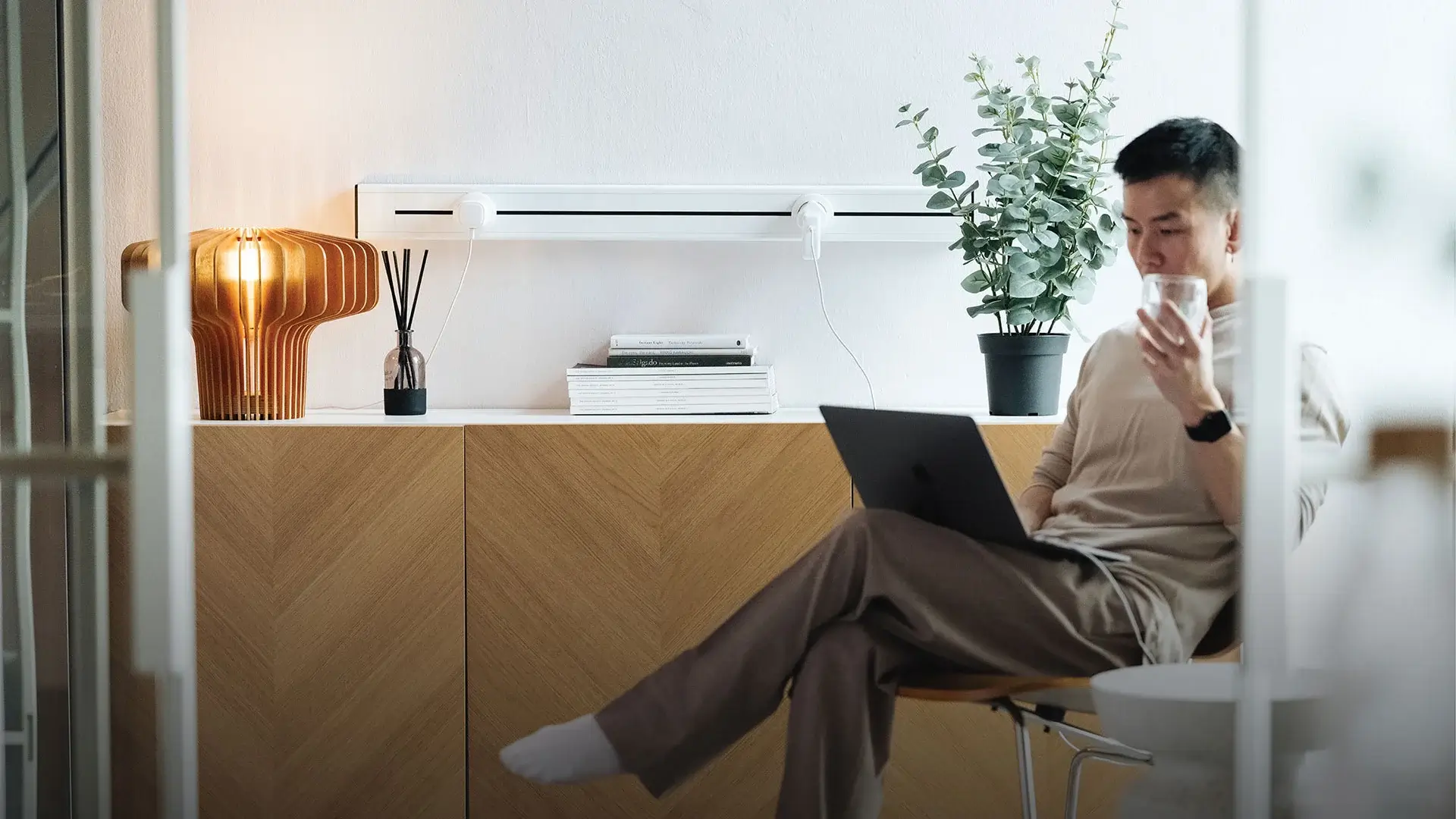
Recessed power track systems are designed to be embedded into walls, furniture, or surfaces. Instead of sitting on top, the track is integrated into the structure, creating a flush and seamless appearance.
This type is often chosen for modern Malaysian interiors where aesthetics are a priority. It blends into the environment, making the power source almost invisible until it is needed.
Installation is more complex compared to surface-mounted systems. It typically requires planning during renovation, as the track needs to be built into the structure.
However, the result is a cleaner, more premium finish that appeals to homeowners who value design as much as functionality.
Modular systems focus on adaptability. They allow users to customise their setup by adding or removing different types of adapters.
These adapters can include standard sockets, USB ports, fast-charging modules, and even specialised connectors depending on the system.
This type of power track is ideal for users who have changing needs. In a Malaysian home office, for example, you might start with basic devices and later expand to include additional equipment. A modular system grows with you.
The flexibility here is not just about positioning. It is also about functionality, making it one of the most versatile options available.
Not all environments have the same power demands. In spaces where higher electrical loads are required, heavy-duty power track systems are designed to handle more demanding usage.
These systems are typically used in commercial settings, workshops, or areas where multiple high-power appliances are used regularly.
They are built with stronger materials, higher load capacity, and enhanced durability to withstand continuous usage.
While they are less common in standard Malaysian homes, they can still be relevant in kitchens with high appliance usage or in home-based businesses.
Another way to categorise power track systems is by how they are installed.
Horizontal tracks are the most common. They run along walls or countertops, providing a continuous line of access to power.
Vertical tracks, on the other hand, are installed upright. These are often used in tight spaces or corners where horizontal installation is not practical.
In Malaysian homes where space optimisation is important, having the option to choose between vertical and horizontal layouts allows for better integration into different environments.
As homes become more connected, smart power track systems are starting to gain attention.
These systems integrate with smart home technology, allowing users to control power usage remotely or monitor energy consumption.
For example, you might be able to switch off specific outlets using an app or track how much energy certain devices are consuming.
While still emerging in Malaysia, this type represents the future direction of power management, combining convenience with data-driven insights.
With so many options available, choosing the right power track system depends on how you plan to use it.
If you want a simple upgrade with minimal renovation, a surface-mounted system is often the most practical choice.
If design and seamless integration are your priority, a recessed system offers a more refined look.
For flexibility and long-term adaptability, modular systems provide the most value.
And if your usage involves high-power appliances or continuous operation, considering a heavy-duty system ensures reliability.
The key is not to choose the most advanced system, but the one that fits your lifestyle and space.
Regardless of the type, safety remains consistent across quality power track systems.
All properly designed systems include insulation, controlled access through adapters, and protective features to prevent accidental contact.
Many are developed in line with standards set by organisations such as the International Electrotechnical Commission, ensuring they meet strict requirements for electrical safety and durability.
This means your choice of type does not compromise safety, as long as you select a certified and properly installed system.
Choosing a power track system without understanding the different types is a bit like choosing furniture without measuring your space. It might work, but it may not work well.
Each type is designed to solve a specific problem. When you match the system to your needs, everything feels intuitive and efficient.
For Malaysian homeowners, this understanding becomes even more important as living spaces become more dynamic and multifunctional.
Power track systems are not a one-size-fits-all solution. They come in different types because homes, lifestyles, and usage patterns are different.
By understanding the available options, you can choose a system that not only works, but works perfectly for your space.
If you are exploring a power track Malaysia solution, taking the time to choose the right type will ensure that your setup remains flexible, safe, and future-ready.
Whether you prioritise design, flexibility, or performance, there is a power track system that fits your needs.
Q: What are the main types of power track systems?
A: The main types include surface-mounted, recessed, modular, heavy-duty, and smart power track systems.
Q: Which type is best for Malaysian homes?
A: Surface-mounted and modular systems are the most commonly used due to their flexibility and ease of installation.
Q: Are recessed power tracks worth it?
A: They are ideal if you prioritise aesthetics and are planning a renovation.
Q: Do all types support the same load capacity?
A: No, heavy-duty systems are designed for higher load requirements.
Q: Are smart power tracks widely used in Malaysia?
A: They are still emerging but are expected to grow in popularity.
Click on the link to find out more about our services and products. Chat with our sales representatives today!
Home
About Nexen
Our Products
Luxe Collection
Power E-Bar Collection
Nexen SG

