
Electrical setups in modern homes are changing rapidly. In the past, most Malaysian homeowners only needed a few wall sockets for televisions, lamps, or basic appliances. Today, the average household relies on far more devices. Kitchens are filled with coffee machines, air fryers, and blenders. Home offices require laptops, monitors, chargers, and networking equipment. Even bedrooms now contain multiple gadgets competing for limited plug points.
This growing demand has exposed one major weakness in traditional electrical layouts. Conventional wall sockets are fixed, limited, and often inconveniently positioned. That is where power track systems come in.
Understanding the purpose of a power track goes beyond simply knowing how it works. A power track is designed to solve practical problems in modern living by improving flexibility, organisation, safety, and long-term usability. In many Malaysian homes and commercial spaces, it is quickly becoming an essential part of contemporary renovation planning.
A power track is a modular electrical system that replaces or supplements traditional wall sockets. Instead of relying on fixed outlets installed at permanent positions, a power track provides a continuous powered rail where adapters can be inserted and repositioned freely.
This creates a more flexible way to access electricity. Rather than rearranging your furniture or appliances around existing sockets, the power source adapts to your layout and lifestyle.
In Malaysia, power tracks are commonly installed in kitchens, home offices, study areas, entertainment spaces, and commercial environments where flexibility and cleaner cable management are priorities.
The core purpose of a power track is simple. It is designed to provide adaptable and convenient access to electricity.
Traditional wall sockets are static. Once installed, they remain fixed unless rewiring work is done. Power tracks remove this limitation by allowing power access points to move along the track.
This flexibility becomes especially useful in spaces where layouts change frequently or where multiple appliances are used throughout the day.
For example, in a Malaysian kitchen, different appliances may be used at different times. One moment you are using a blender, and the next you are plugging in an air fryer or coffee machine. A power track allows these devices to connect wherever it is most practical without relying heavily on extension plugs.
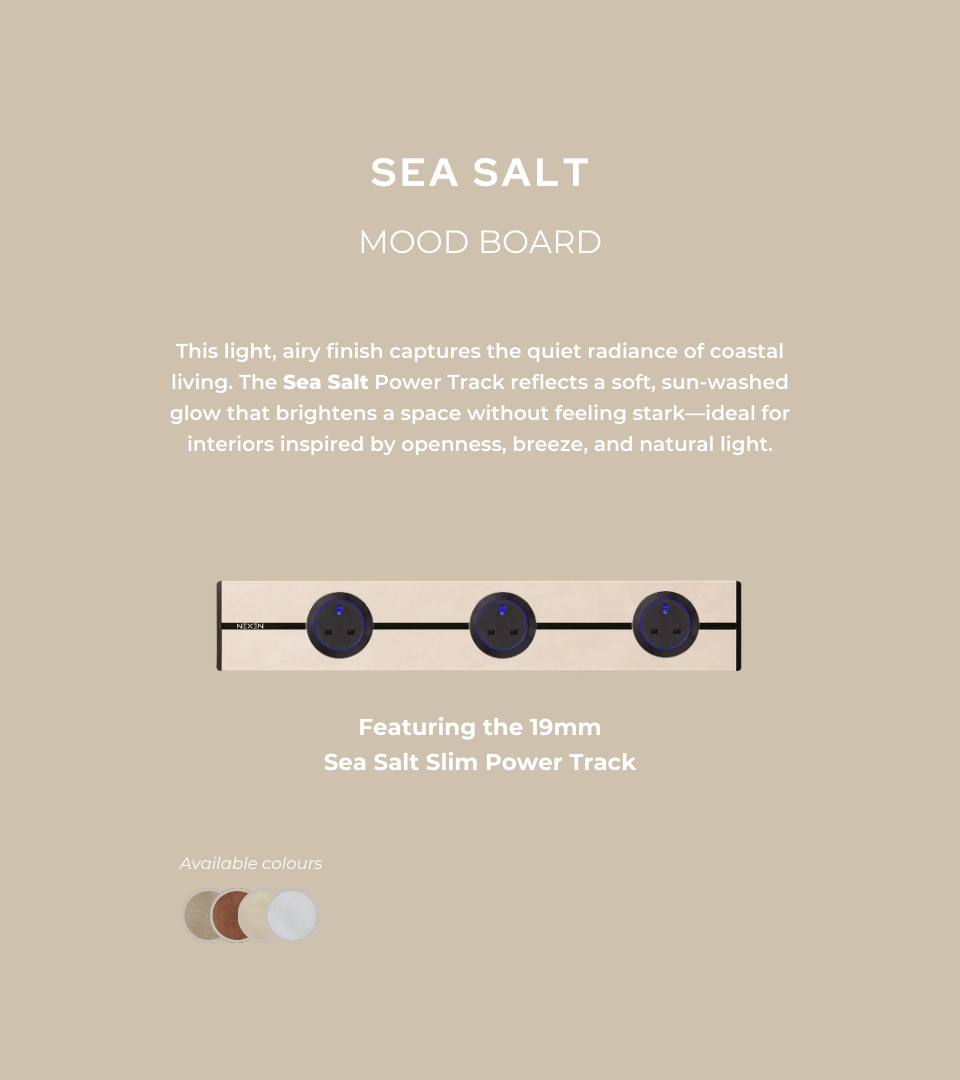
Traditional sockets still serve an important role, but they were designed for a very different era of electrical usage.
Modern households simply use more devices than before. As a result, many homes end up relying on extension cords, multi-plug adapters, and cluttered cable arrangements.
This creates several problems:
Limited flexibility
Cable clutter
Overloaded outlets
Difficult appliance placement
Power tracks address these issues by turning a fixed electrical setup into a more adaptable system. Instead of adding more sockets everywhere, a single power track can support multiple devices more efficiently.
Flexibility is one of the biggest reasons homeowners in Malaysia are switching to power track systems.
Imagine redesigning your kitchen counter setup. With traditional sockets, appliance placement is heavily restricted by outlet locations. If the socket is too far away, you end up stretching cables awkwardly across the surface.
With a power track, adapters can be moved along the rail to wherever power is needed most. This creates a much more practical and user-friendly environment.
The same applies to home offices. As remote work continues to grow in Malaysia, people are using more electronics than ever. Power tracks make it easier to manage changing workstation setups without constantly rearranging cables or adding extensions.
Another important purpose of a power track is improving visual organisation.
Modern interior design trends in Malaysia increasingly focus on minimalism and cleaner layouts. Traditional sockets combined with bulky extension plugs often disrupt this aesthetic.
Power tracks provide a more streamlined appearance by reducing cable clutter and centralising power access into one organised system.
This is especially noticeable in kitchens and entertainment areas, where visible wires can quickly make a space feel messy. A well-installed power track keeps everything cleaner, more structured, and visually balanced.
Safety is another major reason power tracks are becoming more popular.
Many electrical hazards in homes are not caused by the sockets themselves, but by how people compensate for insufficient access points. Overloaded extension plugs and tangled wiring increase the risk of overheating and electrical faults.
Power track systems are designed to reduce these risks by providing a more controlled and organised method of power distribution.
Most quality systems include:
Insulated conductive rails
Controlled adapter access
Secure locking mechanisms
Protective internal barriers
Many are also developed according to standards from the International Electrotechnical Commission to ensure safe operation and durability.
For Malaysian households with children or high device usage, these safety advantages are particularly valuable.
Home renovation trends in Malaysia have shifted significantly in recent years. Homeowners are no longer focused solely on appearance. Functionality and long-term convenience now play a major role in design decisions.
Power tracks align perfectly with this mindset because they combine practicality with modern aesthetics.
In newly renovated condos and landed properties, power tracks are increasingly used to create:
Flexible kitchen workspaces
Cleaner entertainment setups
Adaptable study areas
Smarter office environments
Rather than treating electrical access as a fixed utility, homeowners are starting to see it as part of the overall user experience of the space.
The purpose of a power track extends beyond residential use.
In commercial environments, flexibility becomes even more important. Offices frequently change layouts, workstations evolve, and equipment needs increase over time.
Traditional electrical setups struggle to keep up with these changes without expensive rewiring.
Power tracks provide a practical solution by allowing power access points to shift as needed. This makes them ideal for:
Workstations
Meeting rooms
Retail counters
Collaborative office spaces
For Malaysian businesses, this flexibility can reduce renovation costs while improving workspace efficiency.
One of the overlooked purposes of a power track is future adaptability.
Electrical needs today may not match electrical needs five years from now. New devices, changing layouts, and evolving lifestyles all affect how power is used.
Traditional sockets lock you into a fixed arrangement. Power tracks provide room for change.
This makes them a long-term investment rather than just a short-term convenience upgrade. Instead of constantly adding extensions or modifying layouts, the system evolves alongside your needs.
For many Malaysian homeowners, the answer comes down to daily convenience.
A power track does not necessarily replace every traditional socket in a home. Instead, it improves how electricity is accessed in high-use areas where flexibility matters most.
If your space regularly uses multiple appliances, changing setups, or extension plugs, a power track can dramatically improve usability and organisation.
It is not simply about adding more sockets. It is about creating a smarter and more adaptable way to manage electricity.
The purpose of a power track is ultimately about improving how people interact with electricity in modern spaces.
It provides flexibility where traditional sockets feel restrictive. It creates cleaner environments by reducing clutter. It supports safer electrical management while adapting to changing lifestyles and layouts.
As homes and workspaces in Malaysia continue to evolve, power tracks are becoming more than just a modern feature. They are becoming a practical solution for everyday living.
If you are planning a renovation or looking for a smarter way to manage electrical access, exploring a power track Malaysia system could be one of the most useful upgrades you make for your home or workspace.
Q: What is the main purpose of a power track?
A: The main purpose is to provide flexible and adaptable access to electricity compared to fixed wall sockets.
Q: Are power tracks only used in kitchens?
A: No, they are also commonly used in offices, entertainment areas, and study spaces.
Q: Can a power track replace traditional wall sockets?
A: It can supplement or partially replace traditional sockets depending on the setup.
Q: Why are power tracks popular in Malaysia?
A: They support modern renovation trends, cleaner layouts, and flexible appliance usage.
Q: Are power tracks safe for daily use?
A: Yes, when properly installed and certified, they are designed for safe everyday use.
Click on the link to find out more about our services and products. Chat with our sales representatives today!
Home
About Nexen
Our Products
Luxe Collection
Power E-Bar Collection
Nexen SG

